
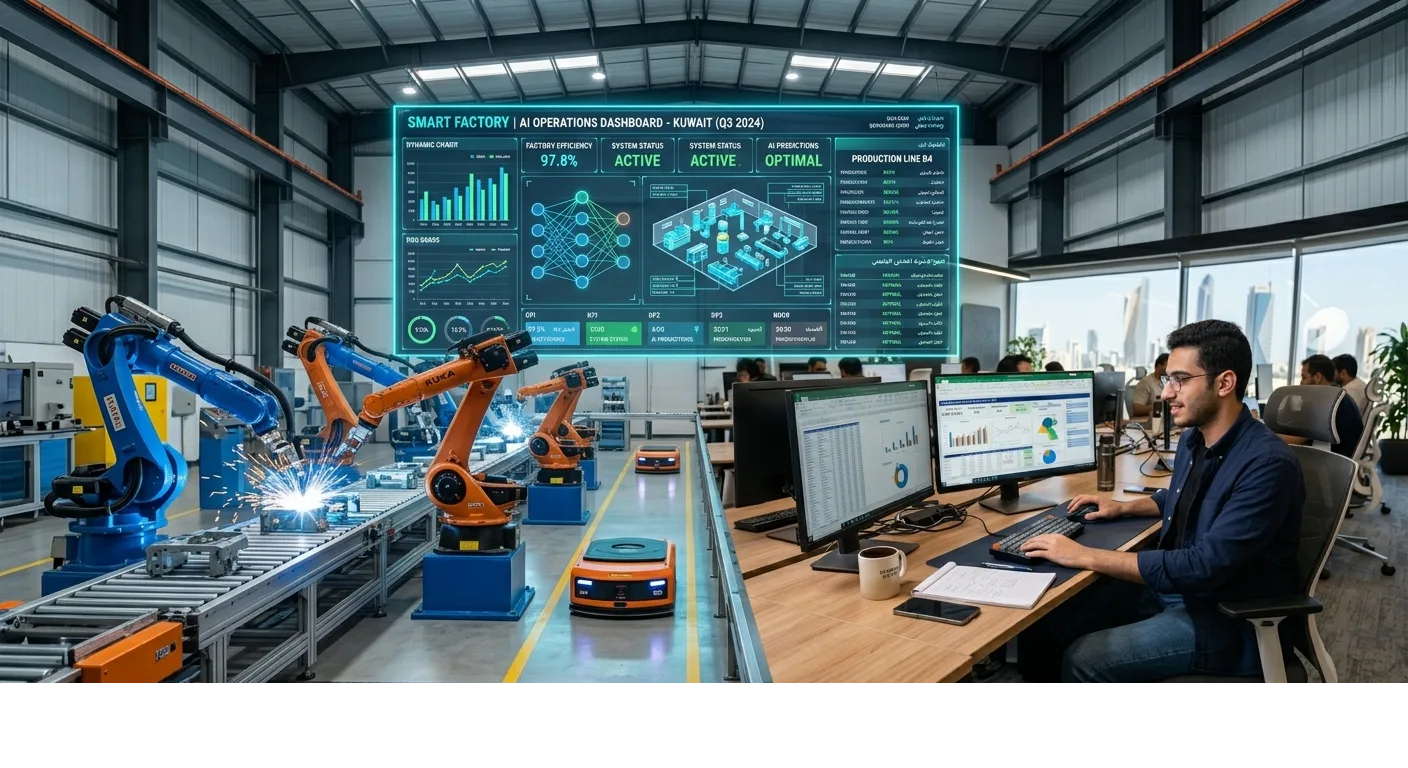
Somewhere right now, a radiologist is reviewing an AI-generated scan analysis. A bank is approving a loan through an algorithm that never sleeps. A logistics company in the Gulf is routing ten thousand deliveries using a system that rewrites itself every hour based on traffic, weather, and demand. None of these things are sci-fi. All of them are happening today.
AI isn't coming. It's here. And the question is no longer whether it will change the world — it's whether you're paying enough attention to understand how it's changing yours specifically, and what that means for your career, your industry, and your choices.
This article isn't about robots taking over the world. It's a grounded, honest look at what AI is actually doing to real industries right now — and what that means if you're building a career in tech in Kuwait in 2025.
The Shift That's Already Happened
For most of the last decade, AI was a background story. It was powering your Netflix recommendations and filtering your spam. Important, sure — but invisible. The shift that happened between 2022 and 2025 is that AI moved from the background to the foreground. It stopped being something that happened to you quietly and became something you could talk to, build with, and argue with.
The release of large language models — ChatGPT, Claude, Gemini — put AI capability directly in the hands of ordinary people for the first time. You didn't need a data science degree. You didn't need to write a line of code. You needed a browser and a question. That democratisation of access is what makes this moment different from every previous wave of automation.
"Every major technology shift — electricity, the computer, the internet — created more jobs than it destroyed. But none of them did it painlessly, instantly, or evenly. AI is following the same pattern, at a much faster pace."ICSA Editorial — based on industry research and 23 years in Kuwait's tech education sector
Claude generating a full-stack application from a single brief — a task that once took a junior developer several days.
Industry by Industry: What's Actually Changing
Talking about "AI changing the world" in the abstract isn't useful. What's useful is understanding which industries are changing the fastest, and in which direction. Here's a grounded breakdown of what's actually happening across the sectors most relevant to Kuwait's economy and workforce:
-
1Software Development — Accelerating, Not DisappearingAI tools like GitHub Copilot and Claude Code are now writing significant portions of production code at major companies. Junior developer hiring has slowed noticeably as AI handles tasks that once needed entry-level headcount. But software output overall is increasing — AI is making developers more productive, not making development less important. The demand is shifting toward people who can architect, evaluate, and direct — not just execute.
-
2Customer Service — Heavily Automated at Tier 1AI chatbots and voice agents now handle the majority of Tier 1 support interactions across banking, telecom, and retail. In Kuwait and across the GCC, major banks and telecoms have deployed AI customer service layers that handle account queries, bill explanations, and basic troubleshooting without a human agent. The human roles that remain are for complex cases, complaints, and relationship management — higher skill, higher pay, smaller headcount.
-
3Healthcare — Augmentation, Not ReplacementAI is reading medical scans, flagging anomalies, suggesting diagnoses, and managing patient data at a level that would have seemed impossible five years ago. The important nuance: AI is augmenting doctors, not replacing them. Medical AI reduces diagnostic errors and processing time — it doesn't remove the need for clinical judgment, patient communication, or ethical decision-making. Healthcare AI is creating new specialist roles faster than it's eliminating existing ones.
-
4Finance & Banking — Data Work TransformedFraud detection, credit scoring, investment analysis, and regulatory compliance reporting are all being handled or heavily assisted by AI in Kuwait's banking sector and globally. The roles most affected are analytical and administrative ones — data entry, basic report generation, routine financial modelling. Senior analysts who can interpret results, challenge model assumptions, and advise clients are more valuable than ever.
-
5Education — Personalisation at ScaleAI tutoring systems are now delivering personalised instruction that adapts in real time to a student's pace, gaps, and learning style. At ICSA, we're already integrating AI tools into how we teach — not to replace instructors, but to give students more responsive practice environments. The role of a teacher is shifting from information deliverer to learning guide and mentor — a role that AI genuinely cannot fill.
The Numbers Behind the Noise
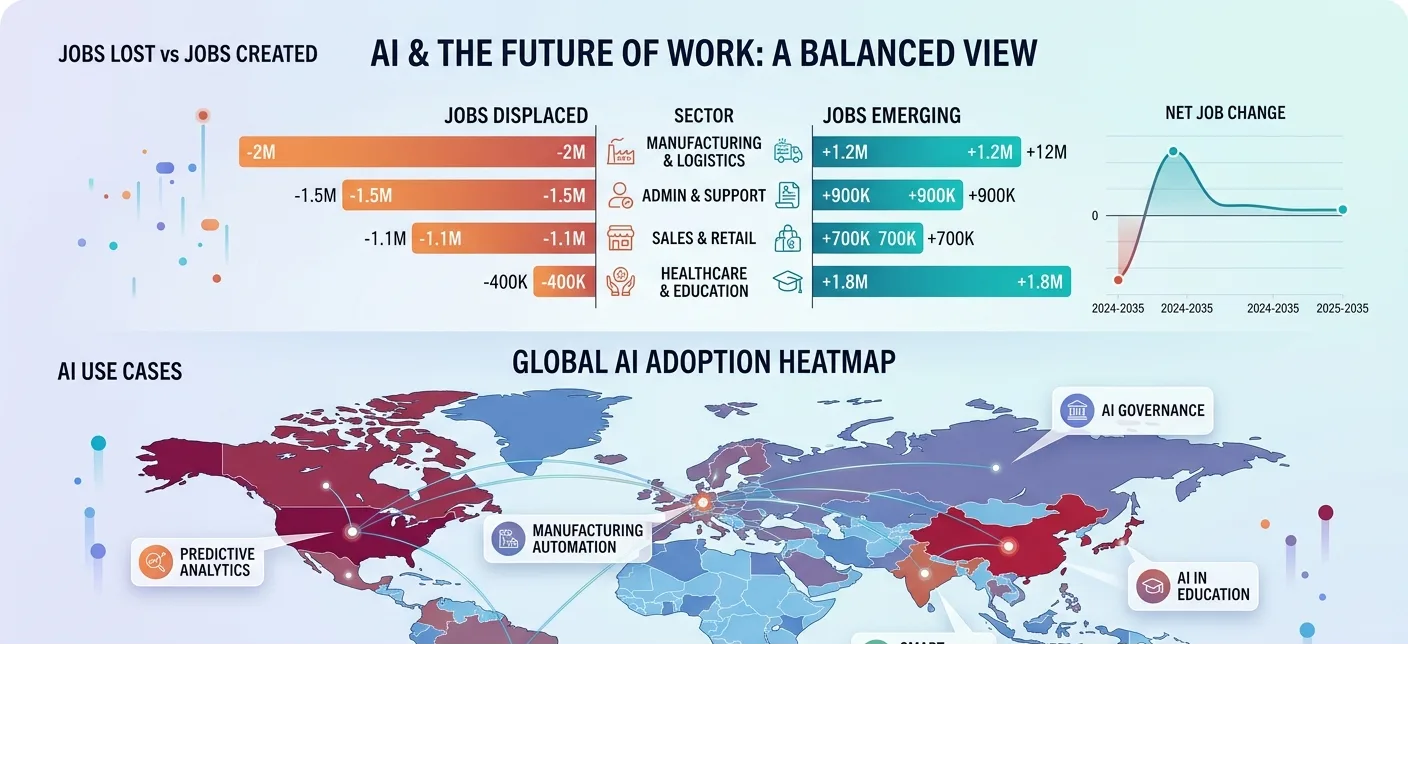
It's easy for AI coverage to feel like hype. The data is sobering enough to take seriously without being apocalyptic:
The pattern in those numbers is important: the same technology that removes roles creates new ones. But the new roles require different skills from the old ones. The people who get hurt are the ones who assume their current skillset stays relevant automatically. It doesn't. It has to be actively maintained and extended.
Claude generating a full-stack application from a single brief — a task that once took a junior developer several days.
What This Means Specifically for Kuwait
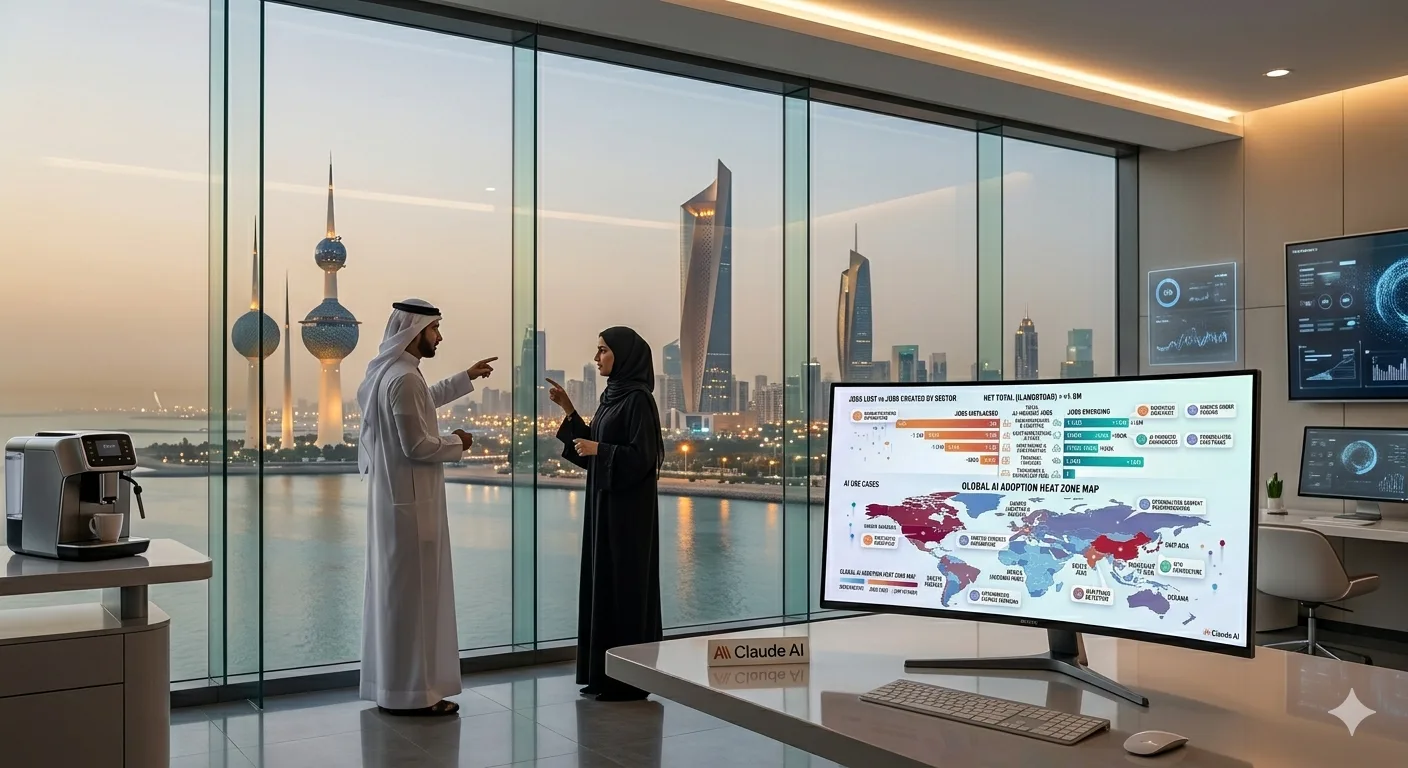
Kuwait's economy is at an interesting and critical moment in relation to AI. The country's Vision 2035 initiative is explicitly tied to digital transformation and reducing dependence on oil revenue — which means AI-literate professionals are a strategic national priority, not just a nice-to-have for tech companies.
The government sector, which employs a significant portion of Kuwait's workforce, is actively investing in digital systems, AI-powered services, and smart infrastructure. Private sector companies — from banks to logistics to retail — are adopting AI tools at a pace that's creating a visible skills gap. The people who can bridge that gap are in an extraordinarily strong position right now.
The skills gap in Kuwait's AI-adjacent roles is real and growing. Employers are struggling to find people who combine technical understanding with practical AI fluency. This is an opportunity — but it has a shelf life. The window won't stay open indefinitely.
Claude generating a full-stack application from a single brief — a task that once took a junior developer several days.
The Two Kinds of People Right Now
When it comes to AI and the working world, we're watching two very distinct groups emerge. Understanding which one you're in — and which one you want to be in — is genuinely useful.
"People won't be replaced by AI. They'll be replaced by people who know how to use AI. That's not a reassuring platitude — it's a precise description of what's already happening in hiring."ICSA Editorial, 2025
Group A is treating AI as a background story. They're aware it exists. They've played with it once or twice. They're assuming their existing skills carry them through. They're not wrong that skills matter — they're wrong that skills are static. This group is going to find the job market increasingly confusing over the next three years as requirements shift under their feet without warning.
Group B has made AI fluency part of their daily work. They use these tools regularly enough to understand their limitations as well as their capabilities. They're building on top of AI rather than competing with it. They're getting more done, producing better output, and developing a compound advantage that grows every month. This group will look back at 2025 the way people who learned web development in 1998 look back at that decision.
The Things AI Still Cannot Do
A grounded picture of AI's impact requires being honest about its limits — not to minimise the disruption, but because the limits are exactly where human value concentrates.
- Physical presence and dexterity. AI cannot install a network cabinet, conduct a hands-on security audit of a physical facility, or fix hardware. IT infrastructure work remains stubbornly human in ways that matter.
- Genuine accountability. AI can produce an analysis, but it cannot be held responsible for it. Clients, employers, and regulators want a human who owns the outcome. That accountability layer has real economic value.
- Contextual relationship judgment. Understanding what a specific client actually needs — as opposed to what they say they need — requires reading people, history, and context in ways AI handles poorly. Sales, consulting, and client-facing technical roles reward this heavily.
- Novel problem-solving in ambiguous situations. AI is excellent at well-defined tasks and mediocre at situations where the problem itself isn't clear yet. The ability to define the right question is still deeply human.
- Trust and ethics in sensitive contexts. In healthcare, legal, security, and financial domains, the human judgment that weighs competing ethical considerations — not just the technically correct answer — cannot be delegated to a model.
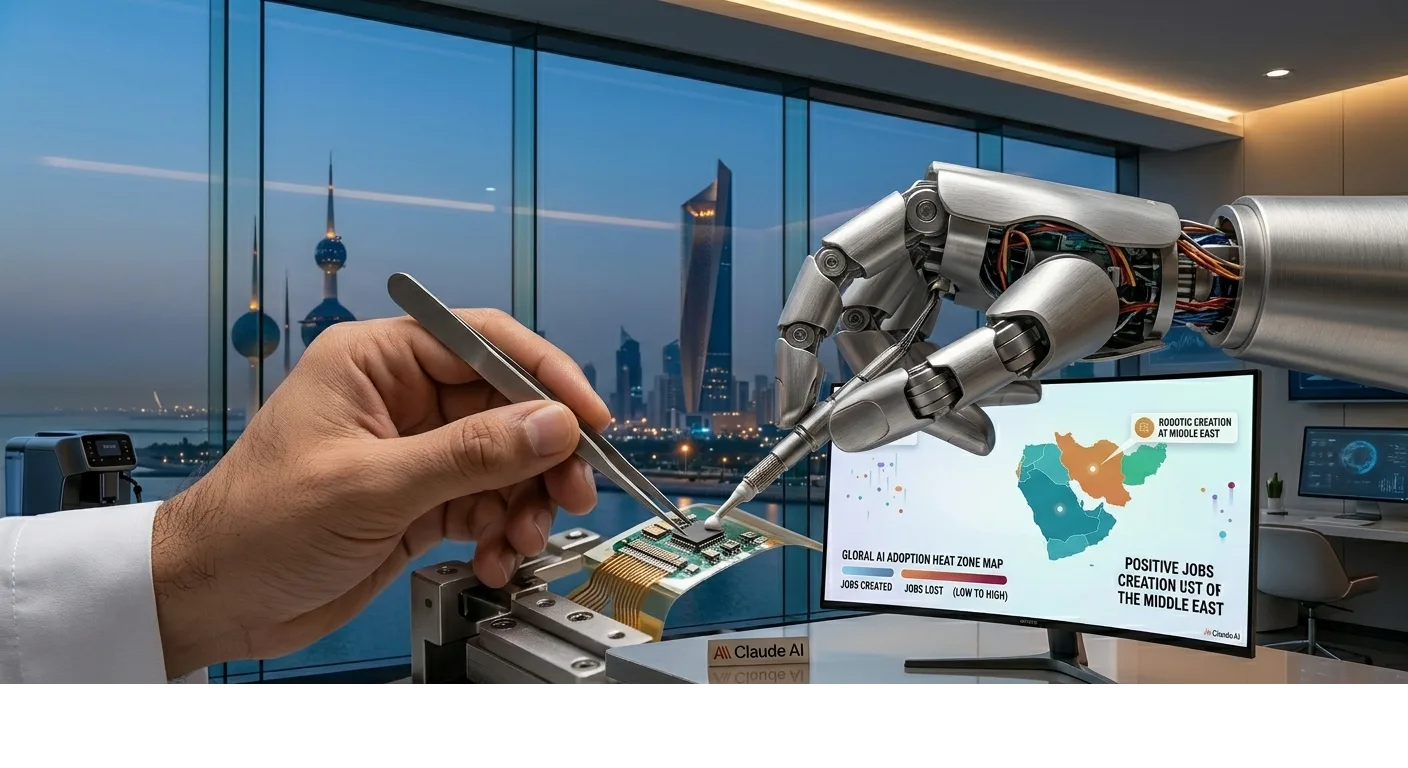
Claude generating a full-stack application from a single brief — a task that once took a junior developer several days.
Ready or Not, the Clock Is Running.
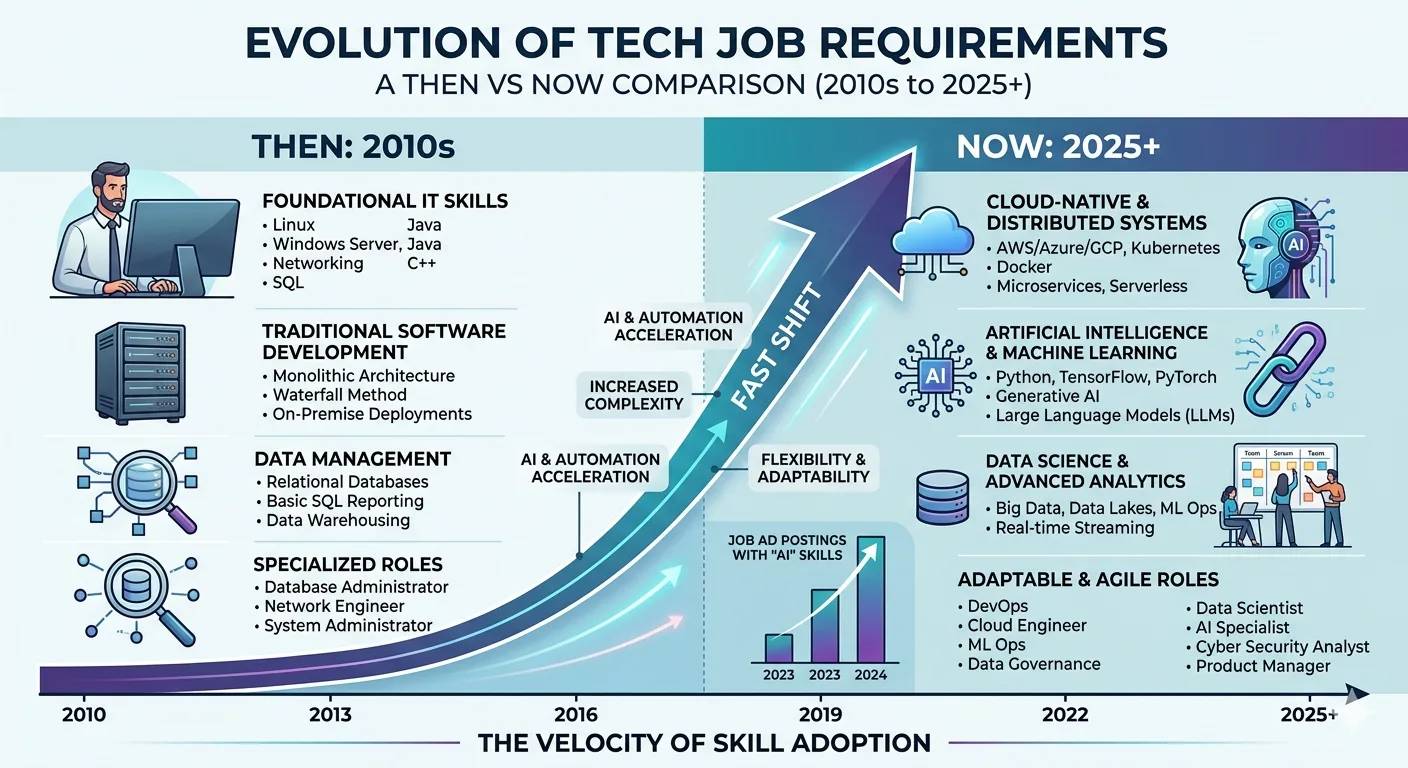
AI is not a future threat or a distant disruption. It is an active, accelerating reshaping of how work gets done — in every industry, including yours. The industries most affected are not the ones at the bottom of the skills ladder; they're the ones near the top. White-collar, educated, well-paid professionals are in the crosshairs of this shift in a way that previous waves of automation never reached.
But this isn't a story about doom. It's a story about timing. The people who understand what AI can and cannot do — and who build their careers around the human skills that remain irreplaceable — are going to find the next decade genuinely exciting. Kuwait is at a moment where being early to AI literacy translates directly into career leverage. The only question is whether you move before it becomes obvious, or after.
At ICSA, we're building our curriculum to reflect the world as it is, not the world as it was. If you want to understand how to position yourself in it, we're happy to help figure out where to start.